

Health & Long-Term Care Transitions for Older Adults
Not every move
is planned.
Sometimes a
transition is required due to hospitalization, a sudden decline in health,
mobility changes, or an unexpected recommendation for long-term care. These
situations can unfold quickly — often leaving families overwhelmed,
time-constrained, and unsure of the next steps.
Needs-based
moves require more than logistics.
They require calm, structured guidance during a highly emotional period.
At King’s Downsizing & Estate Services, urgent and health-driven transitions are guided through our proprietary C.R.A.F.T.™ Method — Clarity. Research. Assess. Find. Time. Even when timelines are compressed, this framework ensures decisions remain thoughtful, coordinated, and aligned with dignity.
When Long-Term Care Transitions Happen Quickly

·
Transition
to a long-term care facility
·
Retirement
residence placement
·
Assisted
living
·
Temporary
rehabilitation housing
These
decisions often occur within days — not months.
Our role is to
bring structure to urgency.
Understanding Long-Term Care Placement in Ontario
All
applications are coordinated through Home and Community Care Support Services
(HCCSS)
(formerly LHINs), part of Ontario Health.
Applications
may be initiated:
An HCCSS care coordinator conducts a health and functional assessment — reviewing medical needs, mobility, cognition, and safety — to determine whether long-term care is appropriate.
Choosing Long-Term Care Homes

·
Location
·
Language,
culture, or religious affiliation
·
Specialized
care units
·
Proximity
to family
In most cases,
up to five
homes
may be selected, with additional flexibility in crisis situations.
Because
shorter waitlists often require fewer choices, strategy matters.
Waitlists, Priority & Timing
Priority may be influenced by:
·
Safety
risks at home
·
Hospital
discharge requirements
·
Level
of care needs
Wait times can
range from weeks to years depending on:
·
Geographic
location
·
Room
type (basic, semi-private, private)
·
Priority
status
When a bed
becomes available, families typically have limited time to respond, and admission often
occurs quickly.
Costs & Coverage
Accommodation costs vary by room type, with income-based subsidies available for eligible residents. OHIP.
What Families Often Get Wrong About Long-Term Care
Common assumptions include:
·
Waiting until a crisis to apply
Applying early — even before care is immediately required — can preserve choice
and reduce emergency-driven decisions.
·
Believing they can apply directly to a
long-term care home
All applications must go through HCCSS, and delays often
occur when this is misunderstood.
·
Assuming waitlists are “first come, first
served”
Priority status, not time alone, determines placement.
·
Thinking refusal of a bed offer is
risk-free
Refusals are limited, and declining without a strategy can affect future
placement.
·
Underestimating how quickly decisions
must be made
Without preparation, families are forced into rushed decisions under pressure.
Understanding
these realities allows families to move forward with clarity rather than panic.
How We Guide Needs-Based Moves
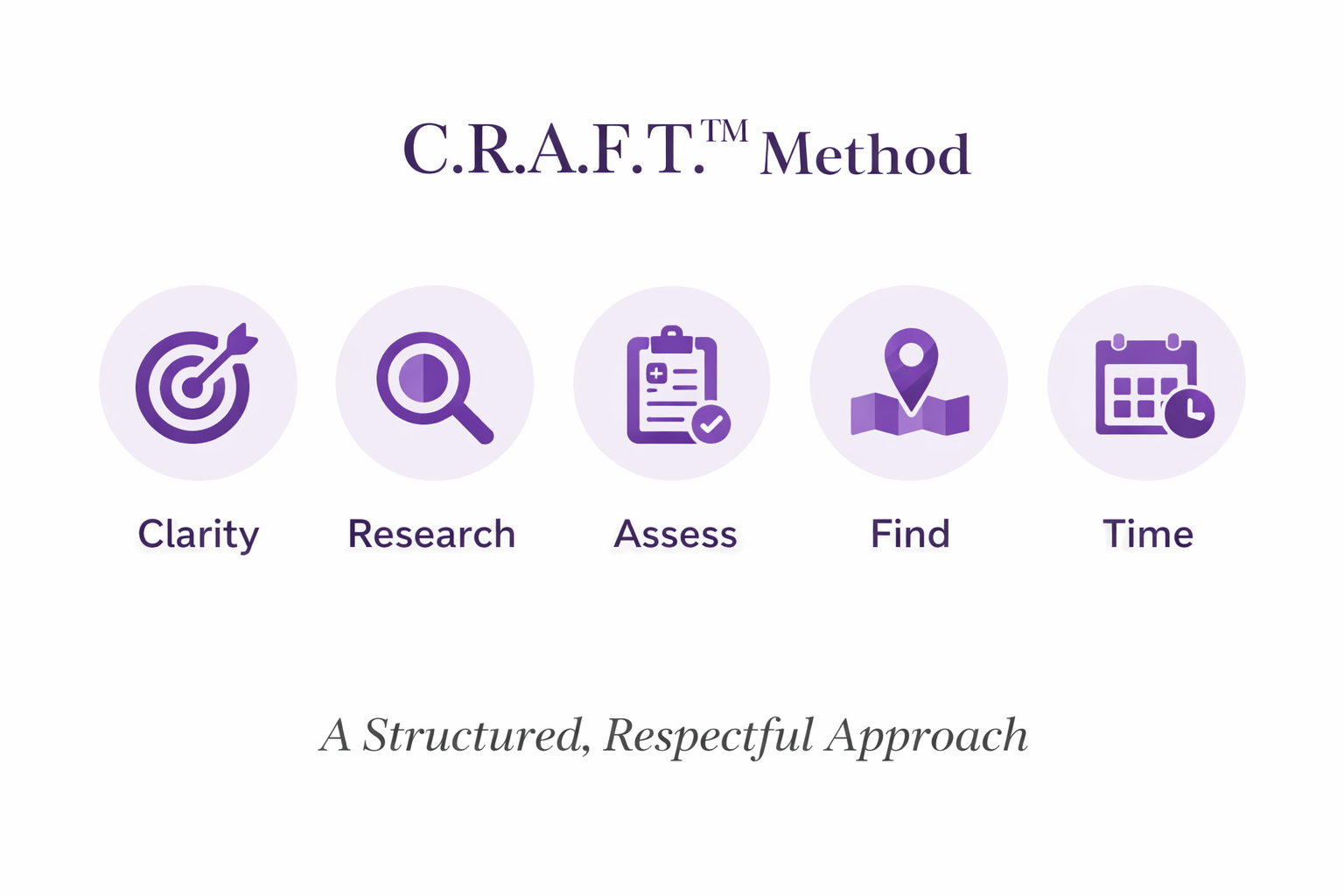
We identify immediate health, mobility, and care requirements while confirming
discharge timelines and decision-making authority. Every transition begins with
a clear understanding of what is medically and practically necessary.
Research
We coordinate with long-term care homes, retirement residences, rehabilitation
providers, and community supports to ensure placement aligns with safety, care
requirements, and long-term stability.
Assess
We assess the current living situation in detail.
Was the individual living alone?
If so, what happens to the home?
Were they living with a spouse?
If so, is the spouse equipped — emotionally, physically, and practically — to
remain in the home independently?
We also
evaluate the property itself, family dynamics, legal authority (including
Powers of Attorney), and any financial or estate considerations that may impact
next steps.
Find
Based directly on our assessment findings, we activate the appropriate
strategy. This may involve preparing the home for sale, coordinating support
services for a remaining spouse, arranging modifications, or mobilizing our
trusted network of organizers, movers, donation partners, cleaners, and estate
sale providers. Every professional engaged is selected to respond specifically
to the needs uncovered during the assessment phase.
Time
We implement a prioritized transition plan that meets critical deadlines while
protecting dignity, reducing overwhelm, and ensuring decisions remain
thoughtful — even under pressure.
Structured Support During High-Stress Moments
We provide:
·
Rapid
yet thoughtful planning
·
Efficient
downsizing and sorting
·
Professional
packing and relocation coordination
·
Safe
and accessible setup in the new environment
·
Clear
communication with family members
·
Property
preparation strategy when a sale is required
Even in urgent
situations, transitions can be handled with care, order, and professionalism.
A sudden move
does not have to feel chaotic.
With King’s
Downsizing & Estate Services, families receive steady, structured guidance
during long-term care transitions — ensuring safety, dignity, and informed
decision-making at every stage.
If you are
navigating an urgent housing transition due to hospitalization or declining
health, begin with structure.